Production Traceability
Optosem emphasizes the traceability of its production, which has been maintained since the start of the company's operations.
Production traceability is a key process in our manufacturing process and involves tracking and recording the entire production process of a product from raw materials to final delivery. This practice ensures that each component of a product and each step in its production process can be identified and traced.
The main objectives of production traceability include ensuring product quality, responding quickly to defects or recalls, complying with regulatory requirements and optimizing production efficiency.
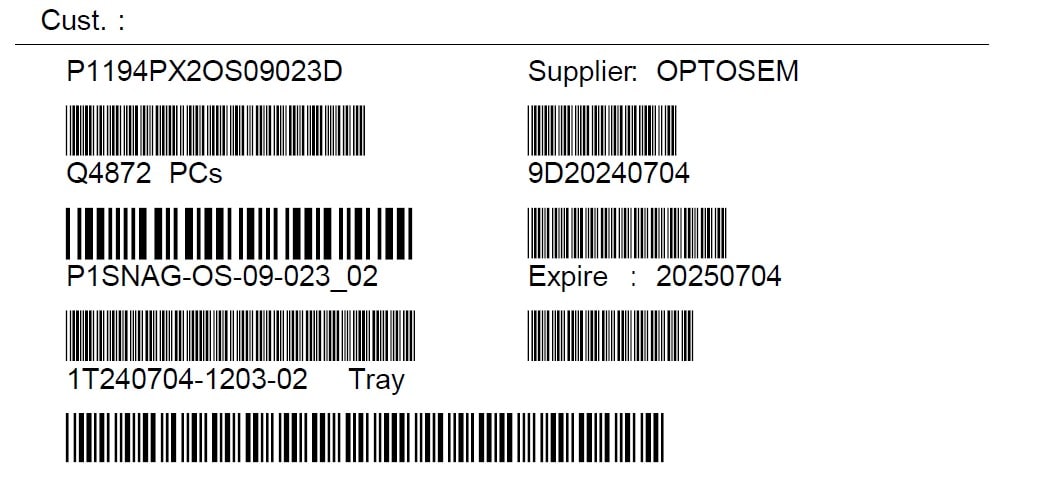
Bar Code Label

QR Code Label
Quality Control
Optosem is deeply committed to maintaining excellent quality standards, consistently meeting customers' requirements, and conforming to product specifications by utilizing industry-standard methodologies. Our comprehensive quality control process includes the following key elements:
Incoming Quality Control (IQC) and Outgoing Quality Assurance (OQA): We ensure that all materials and products meet the required standards from the moment they enter our facilities to the point they leave, ensuring that only the highest quality products reach our customers.
First Article Inspection (FAI): A critical part of our process, FAI ensures that the first product manufactured is thoroughly tested and reviewed against the customer's specifications before full production begins.
Setup, In-Process Quality Control (IPQC), and Final Quality Control (FQC): We maintain strict oversight at every stage of production, from initial setup to the final product, ensuring consistency and quality throughout the manufacturing process.
Statistical Process Control (SPC) / Process Capability Index (CPK): We use these statistical methods to monitor and control our manufacturing processes, ensuring that they remain within specified limits and deliver consistent quality.
Failure Mode and Effects Analysis (FMEA) and Process Control Plan (PCP): These proactive methodologies help us identify potential failure points in our processes and implement controls to prevent them, ensuring robust product reliability.
Comprehensive Testing: We perform dimension checking, fit and function tests, push and pull tests, and other rigorous assessments to verify that our products meet all required specifications and perform as expected.
At Optosem, effective quality control is not just a process but a foundational principle. It is essential for maintaining the integrity of our production process, ensuring product reliability, and achieving long-term business success.
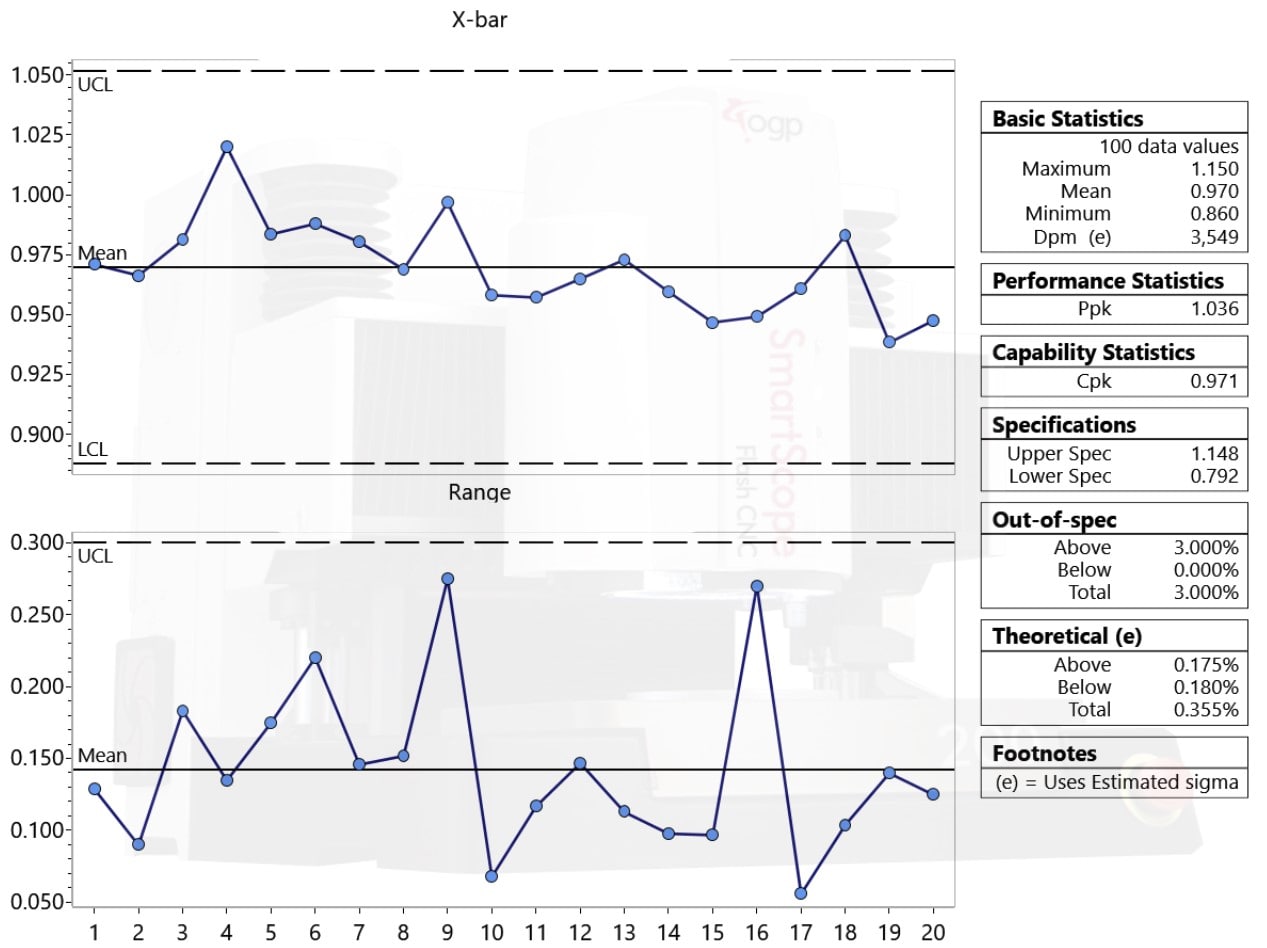
SPC - CPK
Continuous Improvement
Optosem is committed towards delivering ZERO defects to every customer on every project and product. To achieve this high standard of quality, we adhere to a continuous improvement cycle consisting of the following steps:
Identify: We begin by identifying potential areas of improvement or risks that could impact product quality. This involves a thorough examination of processes, materials, and designs.
Measure: Once identified, we measure critical factors and parameters to gather data that provides insight into the current performance levels.
Analyze: The collected data is then analyzed to uncover the root causes of any variations or defects. This step helps us understand where improvements are needed and how to effectively address issues.
Improve: Based on our analysis, we implement targeted improvements in processes, materials, or designs to eliminate defects and enhance product quality.
Maintain: Finally, we maintain these improvements by continuously monitoring processes and making adjustments as needed to ensure ongoing adherence to our ZERO defects commitment.
This rigorous cycle allows Optosem to consistently deliver high-quality, defect-free products to our customers, meeting and exceeding their expectations in every project.
Environmental Compliances
Optosem takes a significant step in environmental compliance, ensuring that our manufacturing processes adhere strictly to environmental regulations. This commitment is crucial not only for legal compliance but also for safeguarding the environment and promoting sustainability in our operations. By implementing rigorous Environmental Management Systems, continuously educating our workforce, and conducting regular audits, we strive to minimize our environmental impact and lead the industry in responsible manufacturing practices.
- Compliance with Environmental Regulations: We ensure full compliance with all environmental regulations set by the government.
- Development of Environmental Policies: We actively develop and maintain a comprehensive environmental policy to guide our operations.
- Implementation of Environmental Management Systems: We implement robust Environmental Management Systems (EMS) to effectively manage and reduce our environmental impact.
- Training and Education: We provide continuous training and education to our employees on environmental practices and sustainability.
- Compliance Monitoring and Reporting: We conduct regular monitoring and reporting to ensure adherence to environmental standards and regulations.
- Auditing and Continuous Improvement: We engage in regular auditing and pursue continuous improvement to enhance our environmental performance.
Our Environmental Management Systems includes the following.
Staff Welfare
Optosem is committed to maintaining excellent staff welfare, recognizing that our employees are the backbone of our success. We prioritize creating a supportive and inclusive work environment, offering competitive benefits, ongoing professional development, and a strong focus on work-life balance.
We have good accommodation hostel & transportation for our foreigner workers, good opportunity for senior staff optional to extend service and offering growth opportunities and build positive work environment.
Our commitment to staff welfare ensures that every team member feels valued, motivated, and empowered to achieve their best.